Back To Our People

Steven Teles

Professor, School of Government and Policy

Professor of Political Science, SNF Agora Institute

  • Hopkins Bloomberg Center
    555 Pennsylvania Ave NW
    Washington, DC
  • Faculty
  • Ph.D. Government and Foreign Affairs , University of Virginia
  • B.A. Political Science , George Washington University

Steven Teles is a political scientist focused on the intersection of political economy, public policy, political parties and ideology.

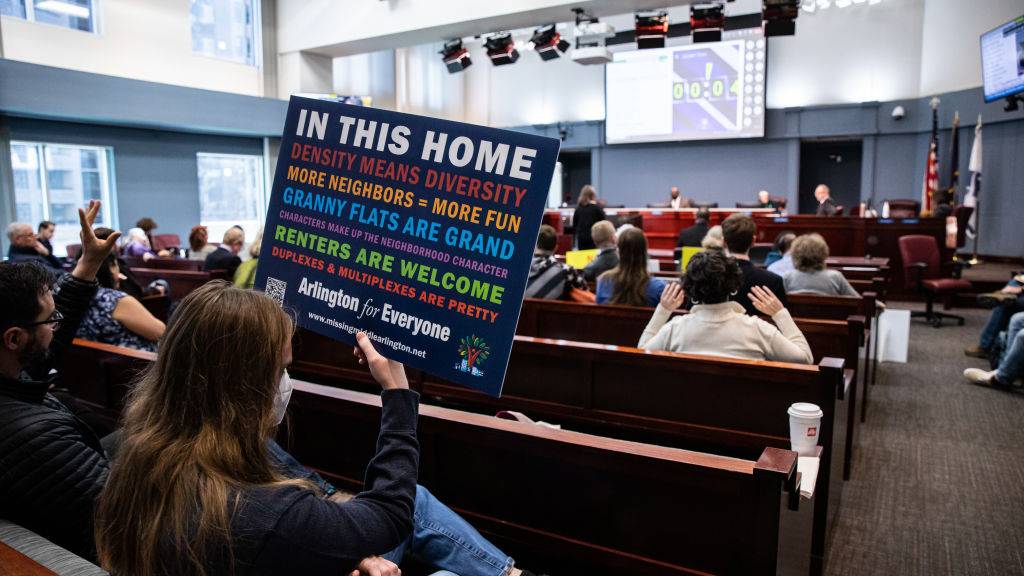
Teles’ recent writings focus on minoritarianism and its impact on democracy, the abundance movement, political economy, the political economy of housing construction and the need for greater ideological diversity in higher education.  

Teles is the author of Never Trump: The Revolt of the Conservative Elites (Oxford, 2020); The Captured Economy: How The Powerful Enrich Themselves, Slow Down Growth and Increase Inequality (With Brink Lindsey, Oxford 2017); Prison Break: Why Conservatives Turned Against Mass Incarceration (With David Dagan, Oxford 2016), The Rise of the Conservative Legal Movement: The Battle for Control of the Law (Princeton, 2008) and Whose Welfare: AFDC and Elite Politics (Kansas, 1996). He is also editor of Conservatism and American Political Development (With Brian Glenn, Oxford, 2009) and Ethnicity, Social Mobility and Public Policy: Comparing the US and UK (with Glenn Loury and Tariq Modood, Cambridge, 2005). He has published widely in more popular outlets, from Democracy Journal, The Nation, The Atlantic, The New York Times and The American Prospect, to National Affairs, The Public Interest, The Economist and National Review.  He is currently at work on a book, under contract with Princeton University Press, entitled Varieties of Abundance, based on his widely read essay with the Niskanen Center, where he is a Senior Fellow. 

Teles earned his Ph.D. in government and foreign affairs from the University of Virginia in 1995 and completed postdoctoral fellowships at Yale University’s Center for American Political Studies and Princeton University. He earned his B.A. in political science from George Washington University in 1989.


  1. Problem Solving Criminal Justice

    Problem Solving Criminal Justice

    The period of problem solving in criminal justice appears to be over, driven by increasing public concern about crime and repolarization in response to social movement activism.

    02.04.2026

    Learn More
  2. Varieties of Abundance

    Varieties of Abundance

    Different varieties of abundance will become more defined as abundance becomes a larger part of our political discourse in the next few years.

    08.28.2025

    Learn More
  3. Minoritarianism Is Everywhere

    Minoritarianism Is Everywhere

    If Democrats want to rebuild state capacity on top of the ruins they will sooner or later inherit from Republicans, they need to think more carefully about what sort of state that should be.

    03.01.2025

    Learn More
  4. The rise of the abundance faction

    The rise of the abundance faction

    By working within a party, the new supply-siders can boost their cause — and pull us away from left-right polarization.

    06.04.2024

    Learn More
  5. Beyond Academic Sectarianism

    Beyond Academic Sectarianism

    Models — often falling under the category of “structural” or “systemic” injustice — turn out to be surprisingly useful in explaining why so few conservatives are present among elite university faculties.

    06.01.2024

    Learn More
  6. The American Enterprise Institute’s Near-Death Experience

    The American Enterprise Institute’s Near-Death Experience

    This paper sheds light on the role of competition between ideologically-aligned movement organizations, as well as how contingency and choice influence movement ecosystems.

    03.01.2024

    Learn More
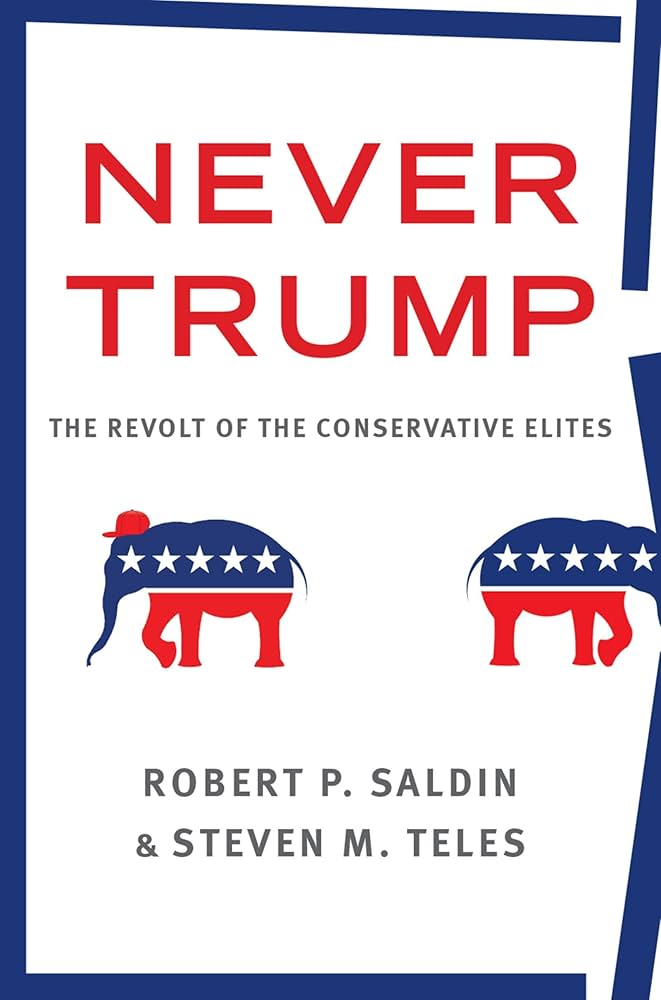
  7. Never Trump: The Revolt of the Conservative Elites

    Never Trump: The Revolt of the Conservative Elites

    Never Trump provides a window into the motivations of these conservative professionals and a guide to the long-term consequences that their unprecedented revolt holds for the Republican and Democratic parties, conservatism, and American democracy.

    05.14.2020

    Learn More