
Minoritarianism Is Everywhere
If Democrats want to rebuild state capacity on top of the ruins they will sooner or later inherit from Republicans, they need to think more carefully about what sort of state that should be.
In Short:
If Democrats want to rebuild state capacity on top of the ruins they will sooner or later inherit from Republicans, they need to think more carefully about what sort of state that should be.
Abstract
or the last few years, American public intellectuals have sounded the alarm about a new disease infecting the body politic: minoritarianism. According to political scientists, conservatives around the world are facing serious demographic threats to their competitiveness. In many cases, their attempts to moderate have been met with populist revolts that splintered the right; in others, the right has unified around a strategy that combines unpopular positions with voter suppression, institutional hardball, crackdowns on civil society, threats of violence, and an embrace of authoritarian strongmen. The Republican Party under Donald Trump is part of this pattern of democratic backsliding. It must be confronted, the argument goes, by a cross-partisan defense of majoritarian, democratic politics that can prevent Republicans from ruling the rest of the country from an illegitimately narrow voting base.
Terms like “minoritarianism,” “democratic backsliding,” and “authoritarian populism” have provided the lingua franca for a broad movement of democracy-oriented organizations and programs at major philanthropies. This framework has also filtered down to the messaging and prioritization of the Democratic Party, which returned to it like a moth to a flame during the most recent campaign. They did so despite the fact that major figures within the party warned that it was distracting from what most voters actually cared about. Governor Jared Polis of Colorado, to take just one example, argued back in February 2024, “Democrats can’t just be the party of protecting liberal democracy….That’s not the top voting issue for most Americans.”
Last November’s election results should raise questions not only about minoritarianism discourse’s political potency, but about whether it is true. Republicans won an electoral majority and a popular plurality for the first time in two decades, and they did so without much, if any, violence or election suppression of consequence. Despite Donald Trump’s persistent falsehoods about the 2020 election and indications he would not accept another loss, it turns out the GOP was able to win the ordinary way. Attacking the failures of Democratic governance, drawing on a global trend of anti-incumbency, and targeting a promising demographic — namely non-college-educated men (including a significantly increased share of Hispanic and black men) — turned out to be a viable alternative to minoritarianism. Just as striking, Nicholas Stephanopoulos, Christopher Warshaw, and Eric McGhee have shown that Republicans won control of the House of Representatives in 2024 without any systematic partisan bias due to legislative gerrymandering.
That said, we should not have needed the results of the 2024 election to tell us that there was always something a little off about democracy discourse. It tells a story about American democracy in which the minoritarianism of recent Republican governance is an aberration in an otherwise majoritarian system. In doing so, it flatters the status quo ante of American democratic practice, giving the impression that our challenges can all be laid at the feet of surging populism on the right.
The problem with this account is that almost no one who studies how public policy has been made in the United States over the last half-century would characterize policymaking as mostly majoritarian. In fact, the characteristic feature of the most salient changes in how we make and execute public policy — changes that were driven mostly by the center left over the last 50 years — is that they have made policymaking pervasively less majoritarian.
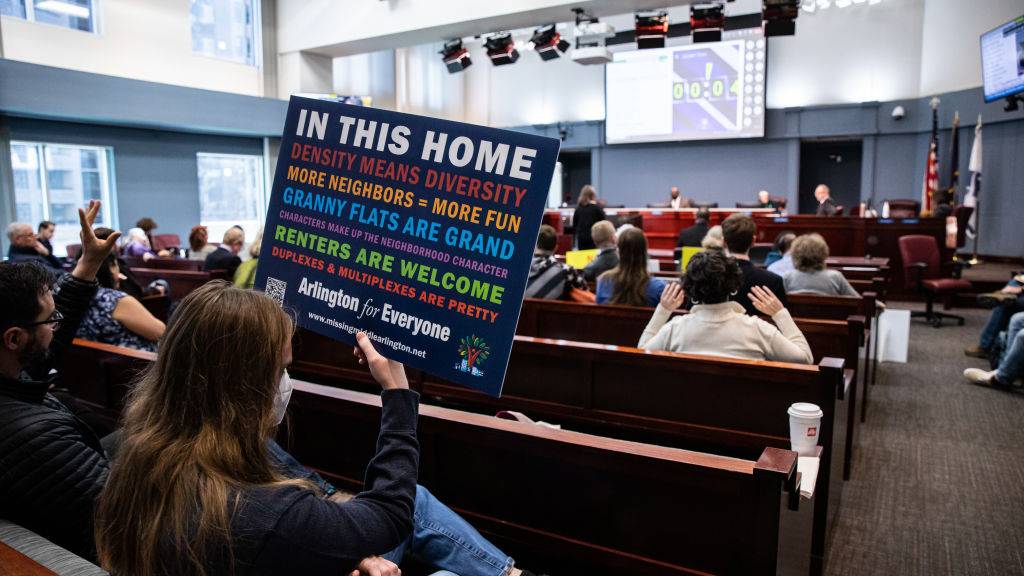
Scholars from a variety of perspectives have noticed this pattern. Whether one focuses on NIMBYism in housing and infrastructure, the role of public-employee unions in local government, the cloistered boards who control licensed professions, or the governance of institutions of higher education, minoritarianism starts to look like the characteristic form of our government rather than an aberration. Majoritarianism may be a desirable goal for democratic government, but the enemies of majoritarianism are most certainly not just on the right.
In fact, many of the populist right’s attacks are not aimed at the left’s majoritarianism, but at its most minoritarian manifestations. One does not need to deny that voting restrictions, rural states’ magnified power in the Senate, the filibuster, or the outsized role of the Supreme Court pose genuine problems for American democracy. But we should recognize that there is a kind of partiality in only attending to the non-majoritarian aspects of our politics embraced by the right.
Democrats are rightly appalled by the way Republicans have governed since Trump’s second inauguration. But if they respond to the administration’s anti-constitutional, proto-authoritarian governance with nothing but resistance and critique, they will miss the opportunity to reflect on their own mode of governing. If Democrats want to rebuild state capacity on top of the ruins they will sooner or later inherit from Republicans, they need to think more carefully about what sort of state that should be.
About the author

Steven Teles
professor, school of government and policy
Steven Teles is a political scientist focused on the intersection of political economy, public policy, political parties and ideology.