The US government’s Office of Scientific Research and Development’s wartime research program catalyzed technology clusters across the country.

Johns Hopkins UniversityEst. 1876
America’s First Research University

The US government’s Office of Scientific Research and Development’s wartime research program catalyzed technology clusters across the country.

For a broad range of initial conditions, allowing residents to tax development can increase or decrease social welfare. Regulating growth with zoning generates even worse outcomes, but allowing the community to charge developers impact fees does better.
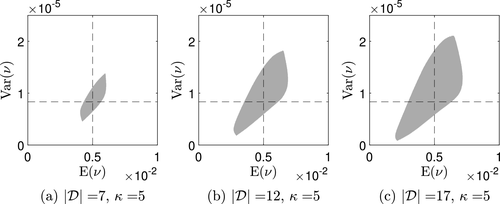
We find that the data can be explained by expected utility theory with low levels of risk aversion and heterogeneous non-singleton choice sets, and that more than three in four households require limited choice sets to explain their deductible choices.


The key innovation is to model competition between schools in an environment in which parents have peer preferences.
Random set theory provides a coherent mathematical framework to conduct identification analysis and statistical inference in settings where data or models are incomplete and has become a fundamental tool in econometrics and finance.

The legal rules that currently guide global integration are no longer working. They are too slow, costly, and localized for increasingly complex advanced economies, and fail to address issues such as poverty, instability, and oppression for the billions living in the developing world.

These findings challenge the Benefit View of the property tax.

Steady state equilibrium reversion levels can exceed the voter’s optimal steady state level, meaning that reversion levels cannot be used to bound the optimal level. Reflecting the inability of the agents to commit to their future proposing and voting behavior, equilibrium paths are Pareto inefficient.